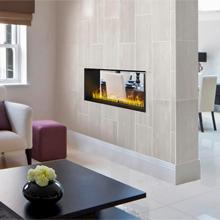
Double-sided (see-through) electric fireplaces are one of those upgrades that instantly looks high-end. You get flame views from both sides, plus supplemental heat for two spaces at once. They’re popular in open layouts, room dividers, and shared walls between a living room and dining area.
But are these modern hearths a smart choice for your home? Let’s walk through sizing, heating performance, installation realities, and how realistic they look in real life.
Space and Layout: Will a 2-Sided Fireplace Work?
Start with measurements and sightlines. Most see-through electric fireplaces land somewhere between 36 and 72 inches wide. That’s a big range, and the “right” size depends on what you’re trying to do: create a statement divider, fill a long interior wall, or add ambiance between two rooms without crowding either side.
Check clearance around furniture, traffic paths, and anything mounted above the unit. If you’re pairing it with a wall-hung TV, leave breathing room between the bottom of the TV and the top of the fireplace. A common rule of thumb is at least 7 inches, but always defer to the manufacturer specs.
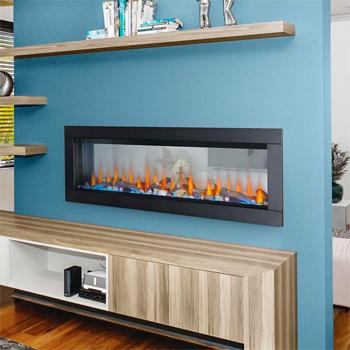
Note: See-through models like the Napoleon CLEARion are popular because they can feel “built-in” without eating up the square footage that a traditional fireplace chase would require.
Before you commit, picture how the fireplace looks from both rooms. With a two-sided unit, there is no “bad side.” Your layout needs clean sightlines from each direction.
Heating Efficiency: Do They Actually Warm Two Rooms?
Electric fireplace inserts vary by model, but many land in the 4,000 to 9,000 BTU range. (BTU is a heat measurement used for comparing heaters; see the EIA definition.) In practical terms, many units are designed to heat roughly 400 to 800 square feet total, depending on layout and insulation.
Two-sided fireplaces can feel more effective because you’re sharing one heat source across two spaces. That said, they’re still best used as supplemental heat. They’re perfect for “take the chill off” comfort, not replacing a whole-home system.
Note: Most electric fireplaces have adjustable heat settings. You can run flames without heat, or use lower heat when you only need a little boost.
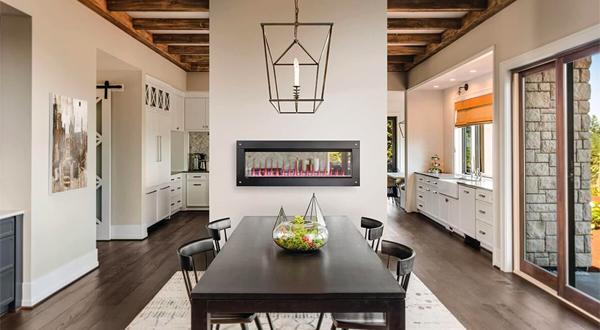
Installation: Is a See-Through Unit Hard to Build In?
This is the part many people underestimate. A double-sided unit usually needs a framed opening inside an interior wall so both sides are finished and stable. Depending on the unit and your home, that can mean basic carpentry, careful measurement, and either a plug-in approach or hardwiring.
If you’re handy, you can sometimes handle the framing and finishing yourself. If you’re not, hiring help can still be reasonable, especially if the space is straightforward. For context, install labor estimates for electric inserts can start at a few hundred dollars. Costs rise with wall work, finishing, and electrical changes.
If you want a better feel for the wall-recess approach, this guide is useful: how to recess a fireplace insert.
Note: Some models give you flexibility with either hardwiring or plugging into an existing 120V or 240V outlet, depending on the unit design and heat output.
Realism: Do LED Flames Look Like Real Fire?
High-quality electric fireplaces have come a long way. On newer premium models, the flame visuals can be convincing from across the room. You’ll often get adjustable brightness, flame speed, and multiple flame color options.
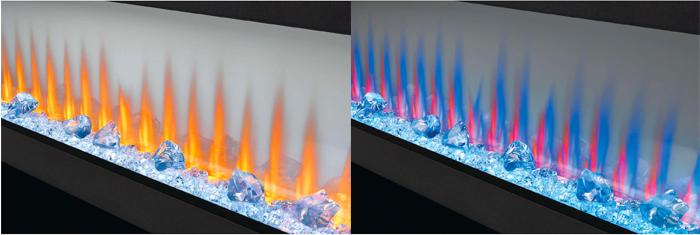
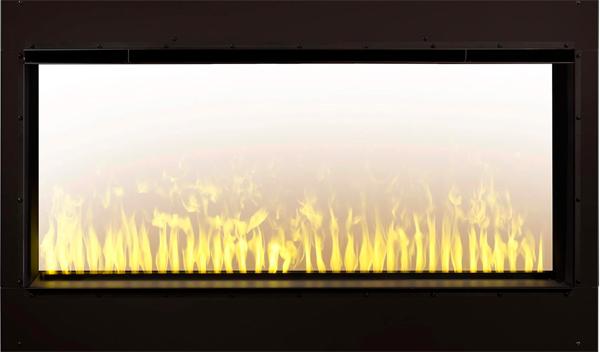
Note: Flames usually look most realistic at night. Water vapor models like Opti-Myst fireplaces can look especially “3D” because you’re seeing illuminated vapor, not just light on a screen.
Value: Are 2-Sided Electric Fireplaces Worth It?
They can be a strong value if you care about design impact. One unit upgrades two rooms at once, which is hard to match with a standard one-sided insert. And because electric fireplaces can support zone heating, they can help you feel warmer in the rooms you actually use.
The Department of Energy explains how zone heating can reduce overall heating costs when used intentionally: Energy.gov on electric resistance and zone heating.
That said, you’re often paying more up front for the see-through design and the build-out. So the “worth it” question comes down to layout and how much you want that wow factor.
Reasons to Buy (and Reasons to Skip)
Why Buy?
- Two-room impact: You get ambiance and a focal point in two spaces at the same time.
- Space-smart heating: One unit can support comfort in a shared wall layout.
- Flexible placement: No chimney needed, so an interior wall can work. The California Air Resources Board even highlights electric options as alternatives to wood burning.
- Easy day-to-day use: Remote control, timers, and flame-only mode are simple and practical.
- Efficient comfort: They can reduce the urge to crank central heat. Also see: how electric fireplaces save you money.
Why Not to Buy?
- Wall work may be required: Framing and finishing can push this into “hire a pro” territory. Angi is a common place homeowners use to find local installers.
- Not primary heat: Even if they can warm up to ~800 sq ft total, they’re still supplemental. Here’s a helpful perspective: electric fireplace as a primary heat source.
- Higher upfront cost: You’ll usually pay more than a one-sided insert.
- Fewer design choices: You have fewer models to pick from, and it must look good from both sides.
- Layout limitations: Small rooms or awkward walls can make the install feel forced.
Frequently Asked Questions
Do I need a chimney or ventilation?
No. Electric fireplaces are vent-free because they don’t burn fuel or produce smoke.
Can I run the flames without heat?
Usually yes. Most models let you use flame-only mode for year-round ambiance.
Will it heat both rooms evenly?
It depends on airflow and layout. Open doorways and good circulation help a lot.
Is professional installation required?
Not always, but many homeowners use a pro for framing, drywall finishing, or wiring.
What’s more realistic: LED or water vapor?
High-end LEDs look great at night. Water vapor (Opti-Myst style) can look more “3D” up close.
Conclusion
A double-sided electric fireplace makes sense when your layout can actually use it. If you have two rooms sharing a wall, or you want a sleek divider in an open plan, it can be an amazing visual upgrade. You’ll get modern ambiance on both sides and solid supplemental heat without the mess of gas or wood.
Just go in with realistic expectations: measure carefully, plan your wall build-out, and treat the heat as comfort-level zone heating. If those boxes check out, a see-through electric fireplace can feel like a “custom home” feature without the traditional fireplace headaches.