One of the best things about electric fireplaces is that most of them let you run the flame effect without turning on the heater. In other words: you get the cozy look of a “fire” for movie nights, summer evenings, or warm climates—without making the room hotter.
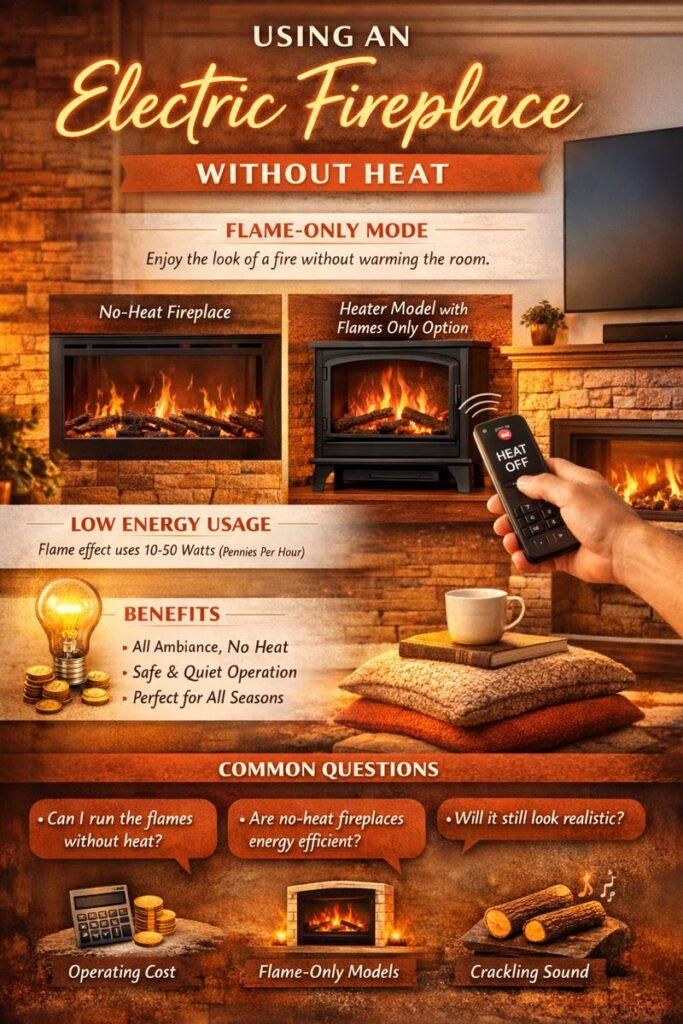
If you’ve ever wanted that “glow in the background” vibe while you work, read, or relax—this is exactly how to get it. Most models have a dedicated “Flame Only” mode, while others are built strictly for ambiance and don’t include a heater at all.
Do All Electric Fireplaces Give Off Heat?
Nope. Many electric fireplaces include a heater, but some are designed as décor pieces only. Those are often called heatless, flame-only, or no-heat fireplaces.
If your goal is pure ambiance (especially for apartments, bedrooms, or warm climates), a no-heat model is an easy win—lighter on power, simpler to install, and usually cheaper.
“No-Heat” Electric Fireplaces:
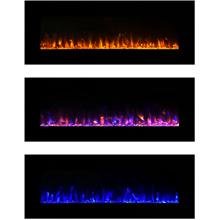
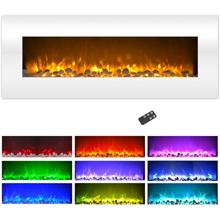
Heatless units don’t have as many “comfort” features as heater models, but that’s the trade-off: you get a cleaner, simpler fireplace that’s often lighter, easier to hang, and less picky about electrical requirements.
What is the Purpose of a “Heatless” Electric Fireplace?
It’s basically a mood piece. You get the flicker, glow, and “fireplace focal point” look without any combustion, smoke, or maintenance. Many heatless fireplaces also offer fun extras like color-changing fire, which makes them feel more like living wall art than a traditional heater.
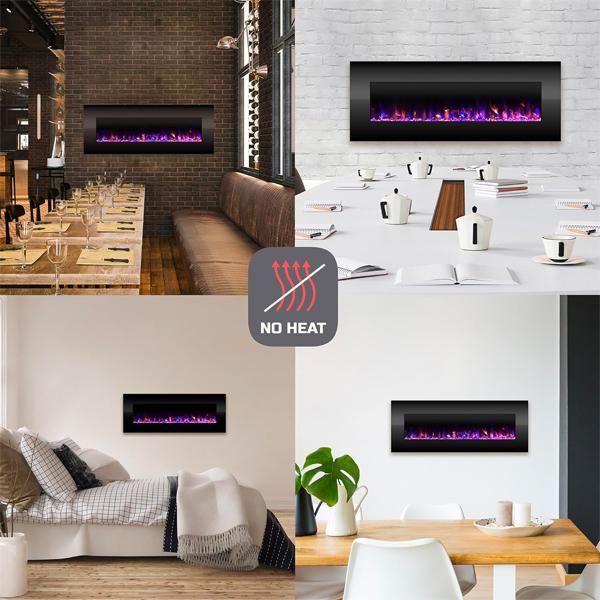
Because there’s no heater running, these models tend to be very quiet, low-energy, and safer than an open flame—especially if kids, pets, or small spaces are part of your setup.
They’re also renter-friendly. Most are designed to mount on a wall with basic hardware, and you can move them with you without leaving major construction behind.
What’s the Energy Consumption When Using Only the Flame Effect?
Flame-only mode uses a tiny amount of electricity compared to running the heater. That’s because the “fire” is created by LEDs and/or a small flame-effect motor—not a 1,500-watt heating element.
So How Much Electricity Does an Electric Fireplace Use Without Heat?
In most cases, flame-only power draw lands around 10 watts to 50 watts, depending on size, brightness settings, and extra features.
That usually works out to pennies per hour. So if you like keeping the flames on in the evenings, it’s one of the cheapest “luxury” vibes you can add to a room. For a deeper cost breakdown, see: Cost to run an electric fireplace.
Does Flame-Only Mode Reduce the Lifespan?
Typically, no. Flame effects are usually powered by LEDs, and LEDs are known for long lifespans—often 25,000 to 50,000 hours (sometimes more).
If anything wears out first, it’s usually the heater components (because heat creates stress over time). So if you mostly use the flame effect and only turn heat on occasionally, you’re generally being gentler on the unit.
Pros & Cons of Using Flames Only
Flame-only mode is awesome—but it helps to know what you’re trading off.
Pros:
- Instant ambiance: You get the cozy focal point any time of year, even when it’s hot outside.
- Low energy use: LED flames use very little electricity compared to heat. More ways an electric fireplace can save you money.
- Comfort control: No accidental overheating—great for bedrooms and smaller rooms.
- Budget-friendly “luxury”: You can leave the flames on without sweating your bill.
Cons:
- No warmth: If you need heat, flame-only won’t help. For what the heater can realistically do, see how much heat electric fireplaces produce.
- Less “real fire” feeling for some people: If you mentally connect a fireplace with warmth and crackle, a silent flame effect can feel incomplete. One fix is adding audio, like electric fireplace logs with crackling sounds.
Frequently Asked Questions
How do I turn on flames without heat?
Most models have a “Flame” button or a “Heat” button you can leave off. If you’re using a remote, look for separate controls for flame brightness/color vs. temperature. If the settings feel confusing, check the owner’s manual—most spell it out in one page.
Can I run flame-only mode all day?
Usually yes, because the wattage is low. Just keep vents clear, don’t cover the unit, and follow your manufacturer’s guidance (especially for wall-mounted units).
Is a “no-heat fireplace” better than a heater model?
It depends on what you want. If you never plan to use heat, a heatless model is often cheaper, lighter, and simpler. If you want occasional warmth in winter, get a standard electric fireplace with a flame-only mode so you have both options.
Does flame-only mode make noise?
Most are nearly silent. You might hear a faint internal motor on certain models, but you won’t get the fan sound you’d hear when heat is running.
Reputable Resources for More Information
- Electric Fireplace Operating Cost Guide
- How Much Heat Electric Fireplaces Produce
- Electric Fireplace Logs With Crackling Sound
- Ways Electric Fireplaces Can Save Money
The Bottom Line
Using an electric fireplace without heat is one of the easiest ways to make a room feel warmer and cozier—without actually warming it up. Whether you choose a true heatless model or just switch your current unit to flame-only mode, you get a low-cost, low-noise, renter-friendly ambiance that works in every season.